Repair Body Panels and Paint
Correctly repairing automotive body panels requires special tools and skills. The first step is assessing what needs to be done. Next is stripping paint and cutting out the damaged area, then replacing the metal, and finishing with body filler. Painting is the final step.
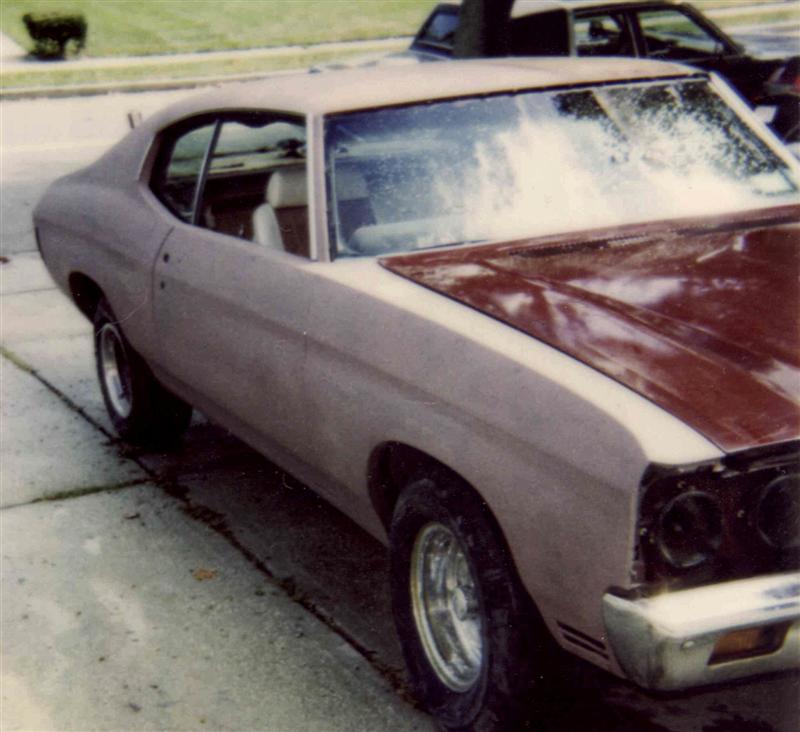
Achieving quality results requires knowledge, patience, and proper tools.
Repairing Damaged Sheet Metal
With very few exceptions (Corvette, Avanti, and a few others), classic car exterior panels are manufactured out of sheet metal. If you're lucky, your project may only need a body panel that unbolts, such as a door, hood, or trunk lid. Then all you would need to do is source a replacement, and repaint it to match the rest of the car. But we're not always that fortunate!
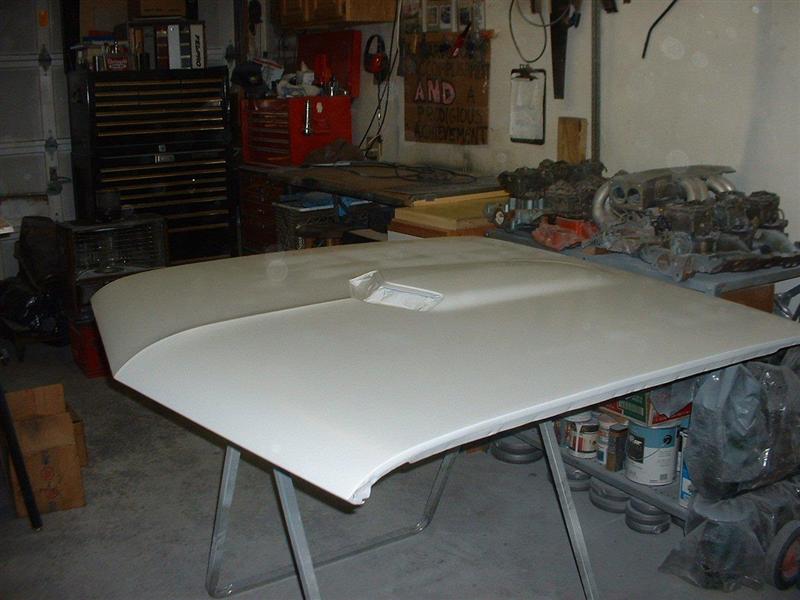
Hoods and trunk lids can be unbolted and replaced fairly easily. This goes for doors, too, but installation is harder.
All other body panels will require cutting out the old metal and welding in replacement panels.
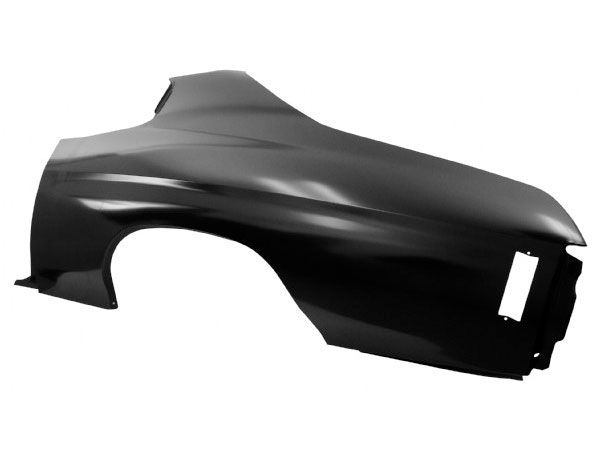
Many body panels, such as interior and trunk floors, quarter panels, dashboards, kick panels, and roof, are a structural, integral part of the vehicle. Removing and replacing them require special tools and skills.
Repairing Rusty Sheet Metal
Damage from rust and rot varies, so every repair is different from one car to another.
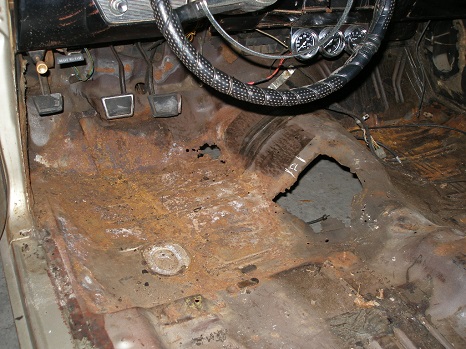
Underneath the interior carpet of unrestored old cars, you often find rust and rot.
Read: Replace Rusty Floor Panels
*******
Learning To Weld
Replacing body panels or installing patch panels on old cars requires welding. Cutting out rusted sheet metal and replacing it with new is the only proper way. If you are sincerely interested in restoring old cars, learning to weld is a must.
Contrary to advertisements you may see, nothing you buy will make you "weld like a pro." The truth is, only time and practice have that ability.
An experienced welder with a bad machine will weld better than an inexperienced welder with a good machine.
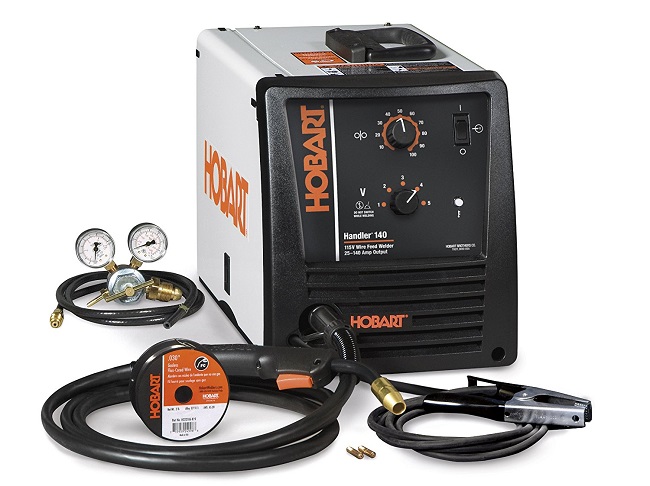
Read: MIG Weld Sheet Metal
If you're just getting started with welding, a MIG welder is a good choice. They're easy to learn on, cheapest to buy, and most people can produce quality, good looking welds with minimal practice.
For a novice restorer just learning to weld, replacing floor panels is a good place to start. They're not critical components, and if they don't come out perfect, they'll be hidden by carpet on the inside and undercoating on the bottom.
Read: How To Make A Patch Panel
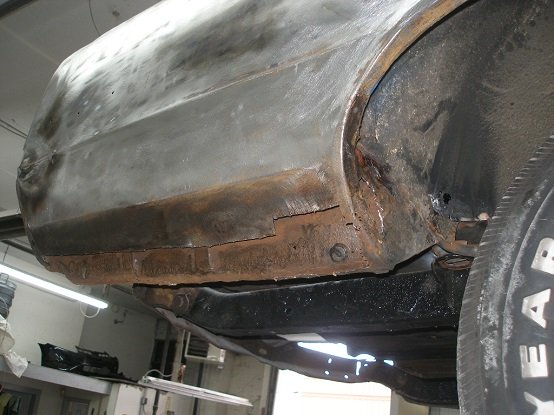
Read: 9 Ways To Cut Sheet Metal
After a patch panel welded in, or a dent is pulled out, it's time for finishing work. This includes applying body filler, sanding, priming and more sanding, glazing putty, and more priming and sanding.
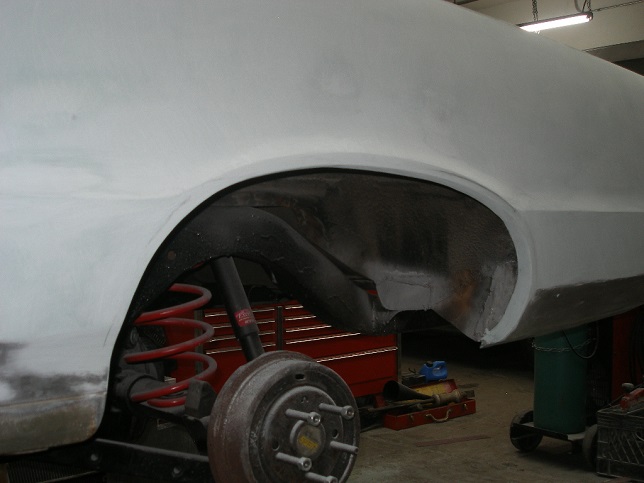
Read: Body Filler Basics
********
DIY Car Painting
A quality paint job is often the final major step in an automotive restoration. Since the paint on your car is about the width of a piece of paper, it hides nothing. That means proper sanding and priming techniques are mandatory.
If you're willing to put in the time and energy, painting a car yourself can be done with excellent results. Just be sure to include a realistic time schedule in your plan, and keep it flexible. Things can and do go wrong!
Read: How To Paint A Car
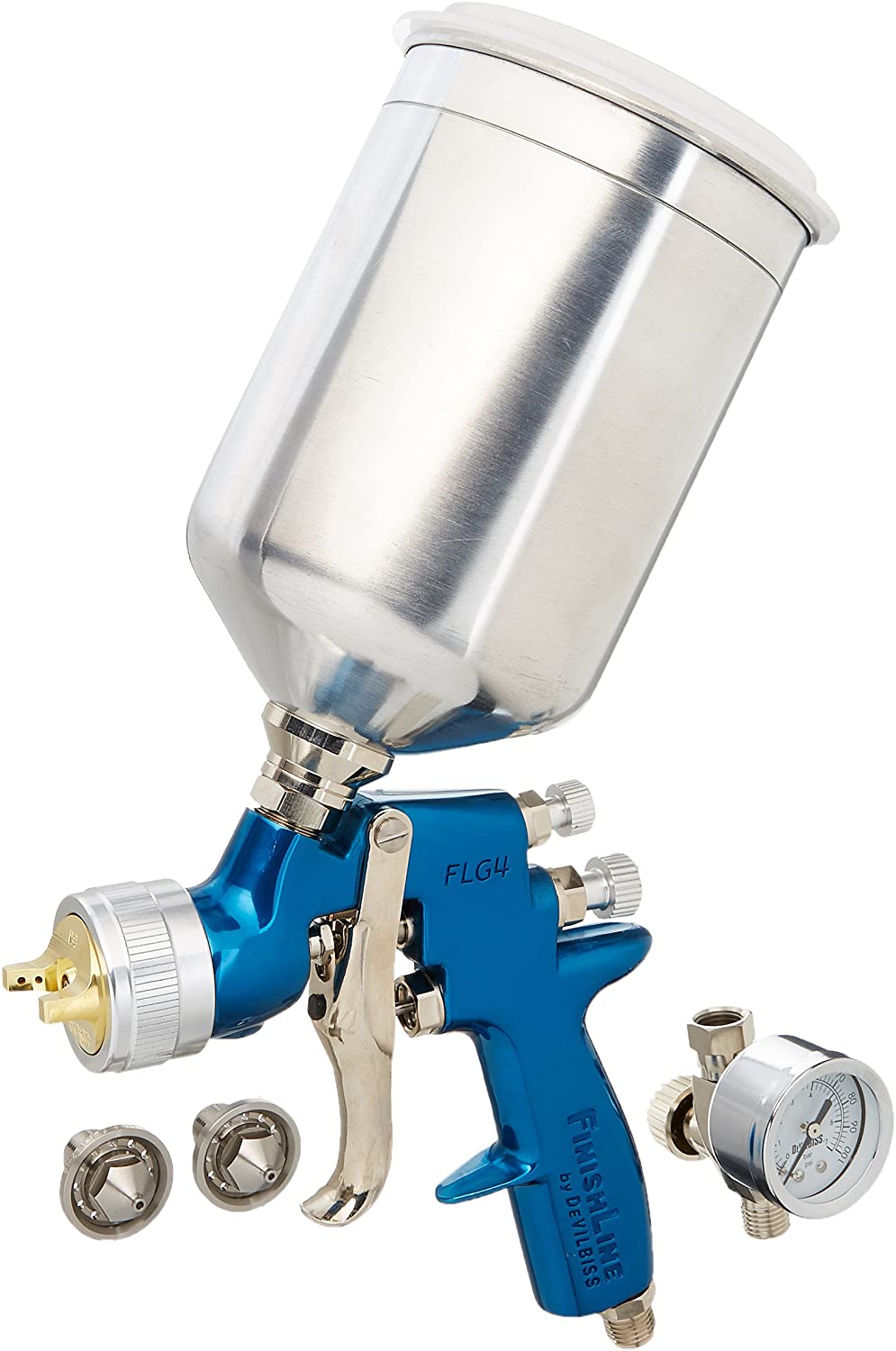
Read: Best Spray Gun For Automotive Restoration
HVLP Paint Systems
If you've never painted a car before, Consider an HVLP turbine system. You'll actually have an advantage; they'll be no re-learn from a conventional spray system.
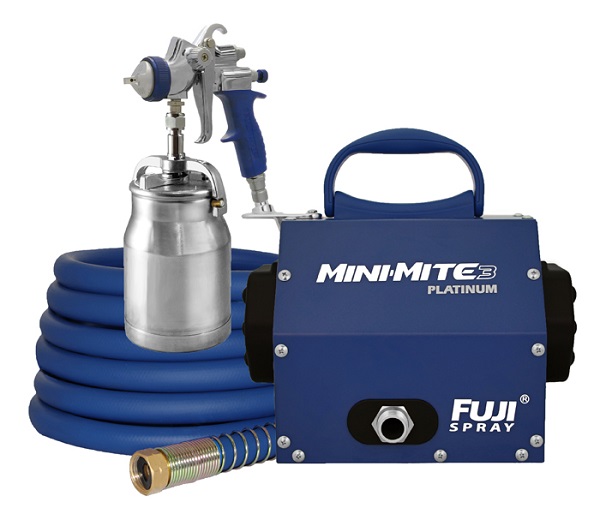
Read: Best HVLP Paint System For Automotive
Car Paint Removal
There are several methods to strip paint from cars, including acid-dipping, sand-blasting, and media-blasting. If you're working with a budget, paint stripping by hand is the best choice.
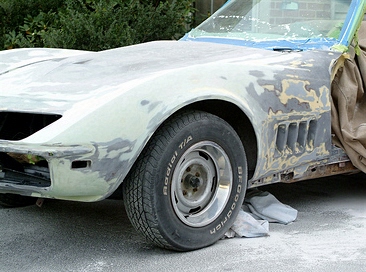
The least expensive (but most time consuming) of paint-stripping techniques is mechanical stripping. With a 4-1/2" angle grinder, you can strip paint off a car with bristle discs or strip discs.
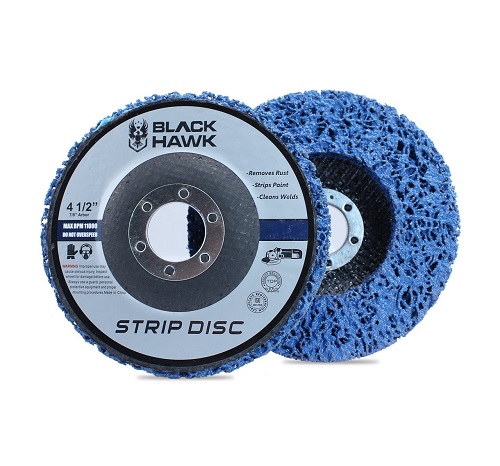
Read: Angle Grinder Attachments For Automotive Repair
Air Tools and Compressor
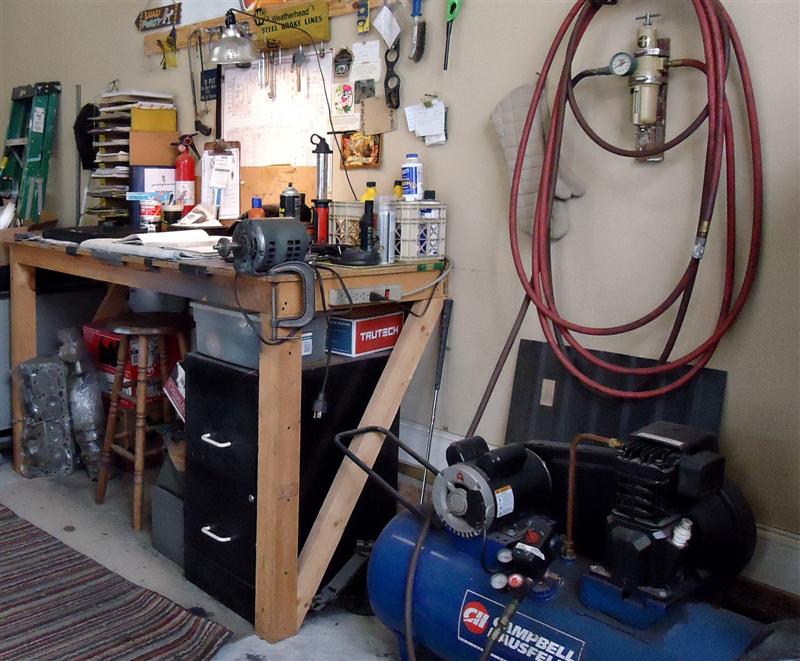
Having an air compressor and air tools in your garage will save you time and allow you to work more effectively. Like other shop equipment, they are an investment, so buy quality name brand tools when you can.
Conclusion
There is no shortcut or "easy way" to do restoration-quality bodywork. Learning to weld and properly use body tools requires practice and discipline.
If you want damaged or rusted sheet metal fixed right, you can either pay someone else a lot of money to do it, or learn the required skills, buy the proper tools, and repair it yourself. It will be time-consuming, messy, and frustrating, but when done correctly, gives the most satisfying results.
*********
Related Articles: