Classic Car Tire Shopping
Article by Mark Trotta
Choosing the right tires for your classic car starts with familiarizing yourself with the different types available. There's bias-ply, radial, whitewall (narrow and wide), raised white letter, and Redline tires. This article will help you reach the desired balance between authenticity, performance, and budget.

Bias Ply Tires
Before the automotive industry changed over to radials in the seventies, there was the bias-ply tire. Construction was layered belts of either polyester, fiberglass, or steel, which ran at angles to each other and to the body of the tire. These body ply cords extended diagonally from bead to bead, usually at angles in the range of 30 to 40 degrees.

Additional layers of ply cords were sometimes added and overlapped in a crisscross pattern. The more ply layers are used, the higher the load rating could be.
Four-Ply vs Six-Ply
Four-ply bias ply tires were most often used on passenger cars, with truck tires having six-plies or more.

Tubes vs Tubeless
Before the early fifties, automotive tires were fitted with inner tubes. Tubeless tires started appearing around the mid-fifties. In the late fifties, steel-corded tires were introduced, and in 1963, Goodyear introduced the polyester corded tire.
Bias Belted
Poly/fiberglass tires were introduced by both Firestone and Goodyear in 1967. Layers of fiberglass belting were placed below the tread surface for added stability. As tread widths began to get wider, these "bias-belted" tires offered improved handling over previous bias-ply tires.
Radial Tires
By comparison, radial-ply tires are constructed with belts at 90-degree angles, and the belts overlap rather than cross each other.
Bias-ply tires carry more weight than a radial, but at the price of faster wear. The tread contact area is smaller on bias-plies, so cornering capabilities are inferior to radials.
Bias-Ply vs Radial Tires
The radial design flexes more, giving better ground contact and traction. A bias-ply tire will "follow" ruts and grooves in the road, while radial tires will roll across them. Radials also run cooler and give a smoother, more comfortable ride.
Some old car enthusiasts prefer the way their car rides on bias-ply tires. A side benefit is that they have extra load-carrying capability.
Radial tires were never offered with original red-line, double whitewall or raised-white letters. However, several aftermarket tire suppliers have purchased the original molds from manufacturers, and offer reproductions.
There are now bias-ply looking tires that feature modern construction that are actually radials. So, you can really have the best of both worlds (for a price).
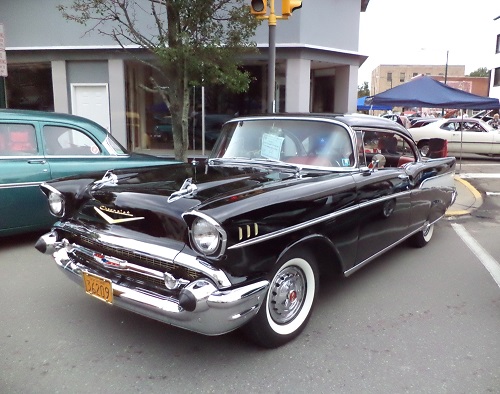
Whitewall and Redline Tires
Whitewalls are available in narrow and wide.

Wide Whites were very popular in the 1950's.
Redline tires were originally seen on mid-1960s to early-1970s American muscle cars. Today, they are manufactured in both authentic bias-ply construction and modern radial designs.

Pictured: 1965 GTO with period-correct Redline tires.
Raised White Letter Tires
Bold, pronounced lettering on tires became popular in the mid to late sixties, primarily on American muscle cars and pony cars.
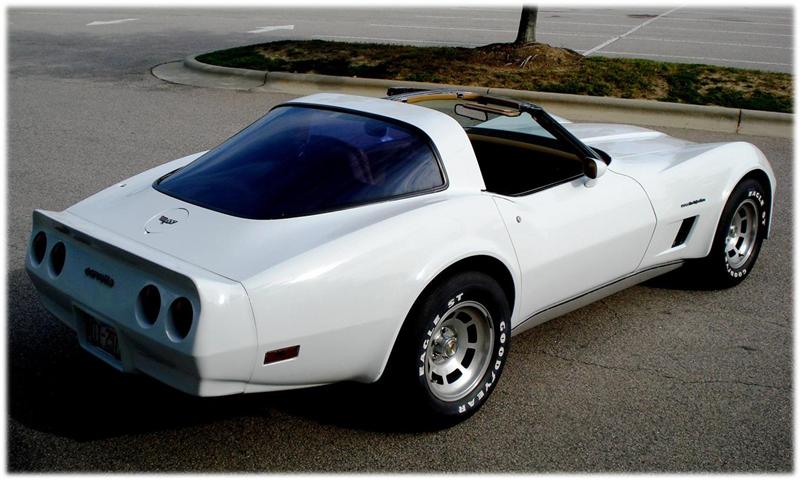
Popularity continued throughout the seventies, gradually dropping off by the early eighties.
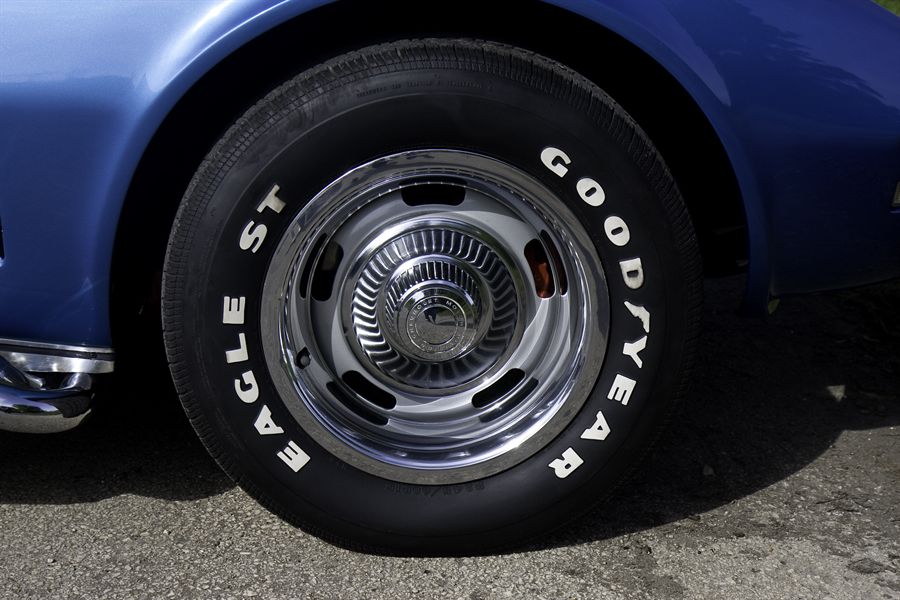
Read: Raised White Letter Tires For Classic Cars
********
Tire Sizes
During the 1960's, sizes started changing from numeric to alpha-numeric.
Example: 670-15 became F78-15.
During the 1970's, sizes changed again, with metric sizing finally becoming the industry standard for passenger cars and light trucks.
Example: F78-15 became 205-75-15.
********
Old vs New Tire Molds
Major manufacturers, such as Goodyear and Firestone, remove old tire molds from service for various reasons. These molds are then replaced with new ones that operate more efficiently and produce better quality tires.
Reproduction Tires
So what happens to all those old tire molds? They are often purchased by privately-owned companies, such as Coker Tire.

The molds are set up in small factories, and still have that big brand name on the sidewall. It's all legal, and these small manufacturers are allowed to use the original names of the tires under license. But the name on the sidewall is not necessarily who made the tire.
********
Installing Larger-Than-Stock Wheels and Tires
Installing 17" or 18" tires on a 50 year-old car designed for 14" or 15" tires may not be a good idea. Oversize wheels and tires may end up rubbing inner fender-wells, or may bottom out over a speed-bump or pothole.
Altering tire size often changes the camber/caster adjustment of the front end, so even if they fit, without making proper front end adjustments they can severely effect the performance and safety of your old car.
Before you contemplate such a swap, stop and reconsider - you could end up with a car that handles worse than it did.
********
Related Articles: